
Introduction
Starting a fitness journey is one of the best decisions you can make for your health. Whether your goal is weight loss, muscle gain, improved endurance, or simply feeling better, the first few months are crucial. Unfortunately, many beginners make avoidable mistakes that slow down progress, increase injury risk, and lead to frustration.
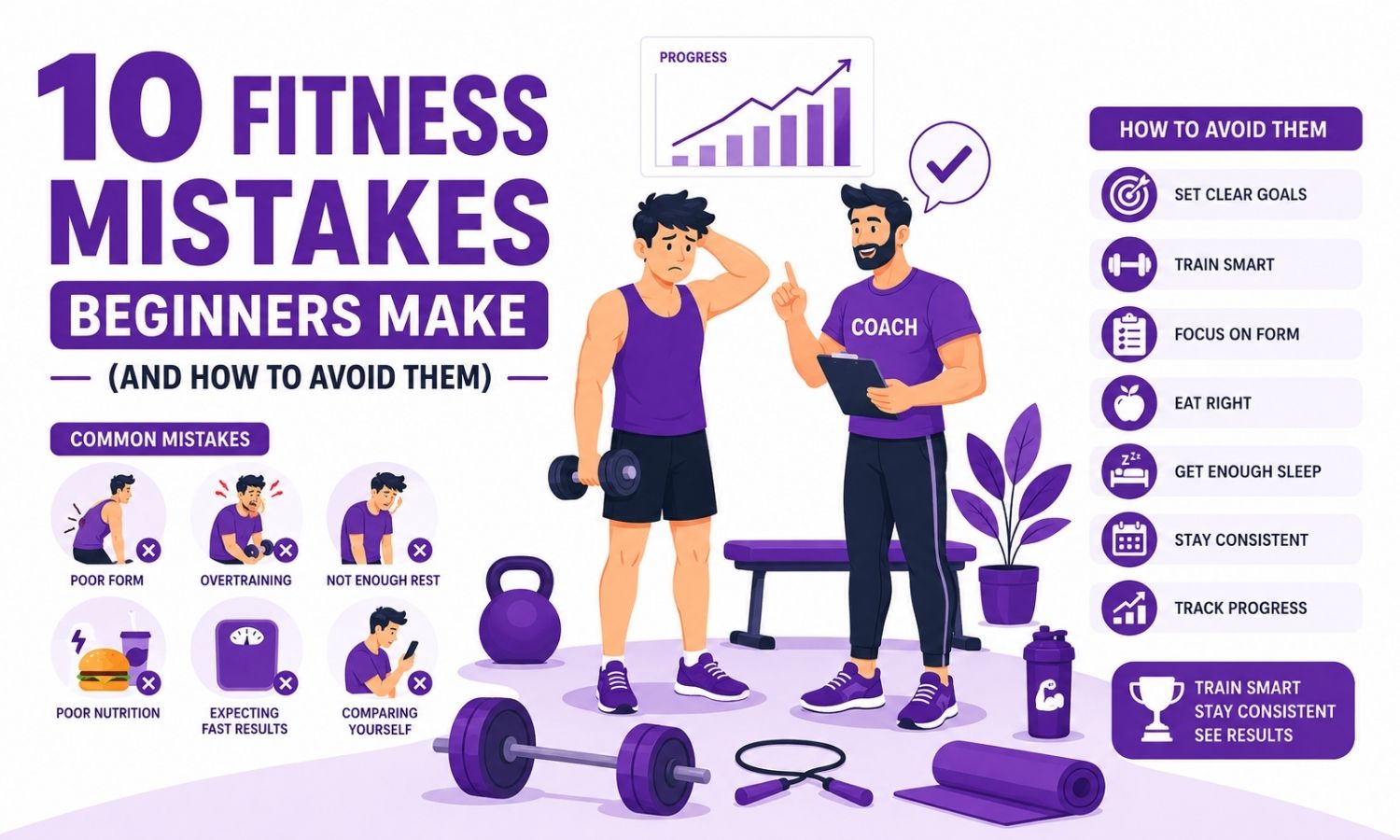
The good news is that most fitness mistakes beginners make are easy to fix once you know what to look for. In this guide, we’ll cover the 10 most common fitness mistakes and provide practical solutions to help you stay on track and achieve your goals faster.
1. Not Having a Clear Fitness Goal
Many beginners walk into a gym without a specific objective. They perform random exercises and hope for results.
Why It’s a Problem
Without a clear goal, it’s difficult to measure progress or stay motivated.
How to Avoid It
Set SMART goals:
- Specific
- Measurable
- Achievable
- Relevant
- Time-bound
- For example:
❌ “I want to get fit.”
✅ “I want to lose 5 kg in the next 12 weeks.”
A clear target helps you choose the right workout and nutrition plan.
2. Doing Too Much Too Soon
Motivation is often highest during the first week. Many beginners try to work out every day, train for hours, or lift weights that are too heavy.
Why It’s a Problem
Overtraining can cause:
- Extreme soreness
- Fatigue
- Burnout
- Increased injury risk
How to Avoid It
Start gradually.
A beginner-friendly schedule could be:
- 3–4 strength workouts per week
- 1–2 light cardio sessions
- 1–2 rest days
Remember, consistency beats intensity in the long run.
3. Ignoring Proper Exercise Form
One of the biggest fitness mistakes beginners make is focusing on heavier weights instead of proper technique.
Why It’s a Problem
Poor form can lead to:
- Back injuries
- Joint pain
- Muscle strains
- Reduced workout effectiveness
How to Avoid It
- Learn the basics before increasing weight.
- Watch instructional videos from trusted trainers.
- Use mirrors to monitor your posture.
- Ask a coach or experienced lifter for feedback.
Master movement first, then focus on strength.
4. Skipping Warm-Ups
Many people jump straight into intense workouts without preparing their body.
Why It’s a Problem
Skipping a warm-up can lead to:
- Reduced performance
- Muscle stiffness
- Higher injury risk
How to Avoid It
Spend 5–10 minutes warming up with:
- Light cardio
- Dynamic stretches
- Mobility exercises
A proper warm-up increases blood flow and prepares your muscles for exercise.
5. Neglecting Nutrition
You can’t out-train a poor diet.
Many beginners believe exercise alone will produce results while continuing unhealthy eating habits.
Why It’s a Problem
Poor nutrition can cause:
- Low energy
- Slow recovery
- Muscle loss
- Lack of progress
How to Avoid It
Focus on:
- Lean protein sources
- Whole grains
- Fruits and vegetables
- Healthy fats
- Adequate hydration
Aim to make nutrition support your fitness goals rather than work against them.
6. Not Getting Enough Sleep
Fitness progress doesn’t happen during workouts it happens during recovery.
Why It’s a Problem
Lack of sleep can:
- Reduce muscle recovery
- Lower energy levels
- Increase cravings
- Affect workout performance
How to Avoid It
Try to get:
- 7–9 hours of quality sleep each night
- Consistent sleep and wake times
- Limited screen exposure before bed
Good sleep is one of the most powerful fitness tools available.
7. Comparing Yourself to Others
Social media has made comparison easier than ever.
Many beginners compare their progress to fitness influencers or people who have been training for years.
Why It’s a Problem
Comparison often leads to:
- Discouragement
- Unrealistic expectations
- Loss of motivation
How to Avoid It
Focus on:
- Your own progress
- Personal records
- Improved habits
- Consistency
The only person you should compare yourself to is who you were yesterday.
8. Relying Only on Cardio
Cardio is excellent for heart health and calorie burning, but it’s not the complete fitness solution.
Why It’s a Problem
Doing only cardio may:
- Limit muscle growth
- Slow metabolism improvements
- Create an unbalanced fitness routine
How to Avoid It
Combine:
- Strength training
- Cardiovascular exercise
- Mobility work
A balanced approach helps build muscle, improve endurance, and support long-term health.
9. Being Inconsistent
Many beginners start strong but lose momentum after a few weeks.
Why It’s a Problem
Inconsistent workouts make progress difficult because fitness is built through repeated effort over time.
How to Avoid It
Create sustainable habits:
- Schedule workouts like appointments
- Start with realistic goals
- Track progress
- Focus on consistency rather than perfection
Missing one workout isn’t a failure. Quitting altogether is.
10. Expecting Instant Results
One of the most common fitness mistakes beginners make is expecting dramatic changes within a few days or weeks.
Why It’s a Problem
Unrealistic expectations often lead to disappointment and quitting.
How to Avoid It
Understand that fitness is a long-term journey.
Typical timelines:
- Increased energy: 1–2 weeks
- Strength improvements: 3–6 weeks
- Visible body changes: 8–12 weeks
- Major transformations: Several months
Trust the process and celebrate small victories along the way.
Bonus Tip: Track Your Progress
Many beginners rely only on the scale to measure success.
Instead, track:
- Body measurements
- Progress photos
- Strength improvements
- Workout performance
- Energy levels
A number doesn’t always reflect progress on the scale.
Final Thoughts
Every fitness journey begins with mistakes. What separates successful people from those who quit is the ability to learn and adapt.
By avoiding these common fitness mistakes beginners make, you’ll improve your results, reduce injury risk, and build sustainable habits that last for years.
Remember:
- Set clear goals.
- Focus on proper form.
- Prioritize recovery.
- Eat nutritious foods.
- Stay consistent.
Fitness isn’t about being perfect. It’s about showing up regularly and making steady progress. Start small, stay patient, and trust the process. Your future self will thank you.