
Introduction
Walk into any gym, browse an online store, or scroll through social media, and you’ll find countless advertisements for smartwatches, fitness trackers, and smart rings promising to improve your health. These devices have become increasingly popular among people trying to lose weight, stay active, and build healthier habits.
But a question remains: Does wearable fitness technology for weight loss actually work, or is it just another fitness trend?
The answer is more nuanced than a simple yes or no. Wearable devices can be incredibly effective tools for supporting weight loss, but they are not magic solutions. Their success depends on how they are used and whether they encourage long-term behavior changes.
In this article, we’ll explore how wearable fitness technology works, its benefits and limitations, and how you can use it effectively to achieve sustainable weight loss.
What Is Wearable Fitness Technology?
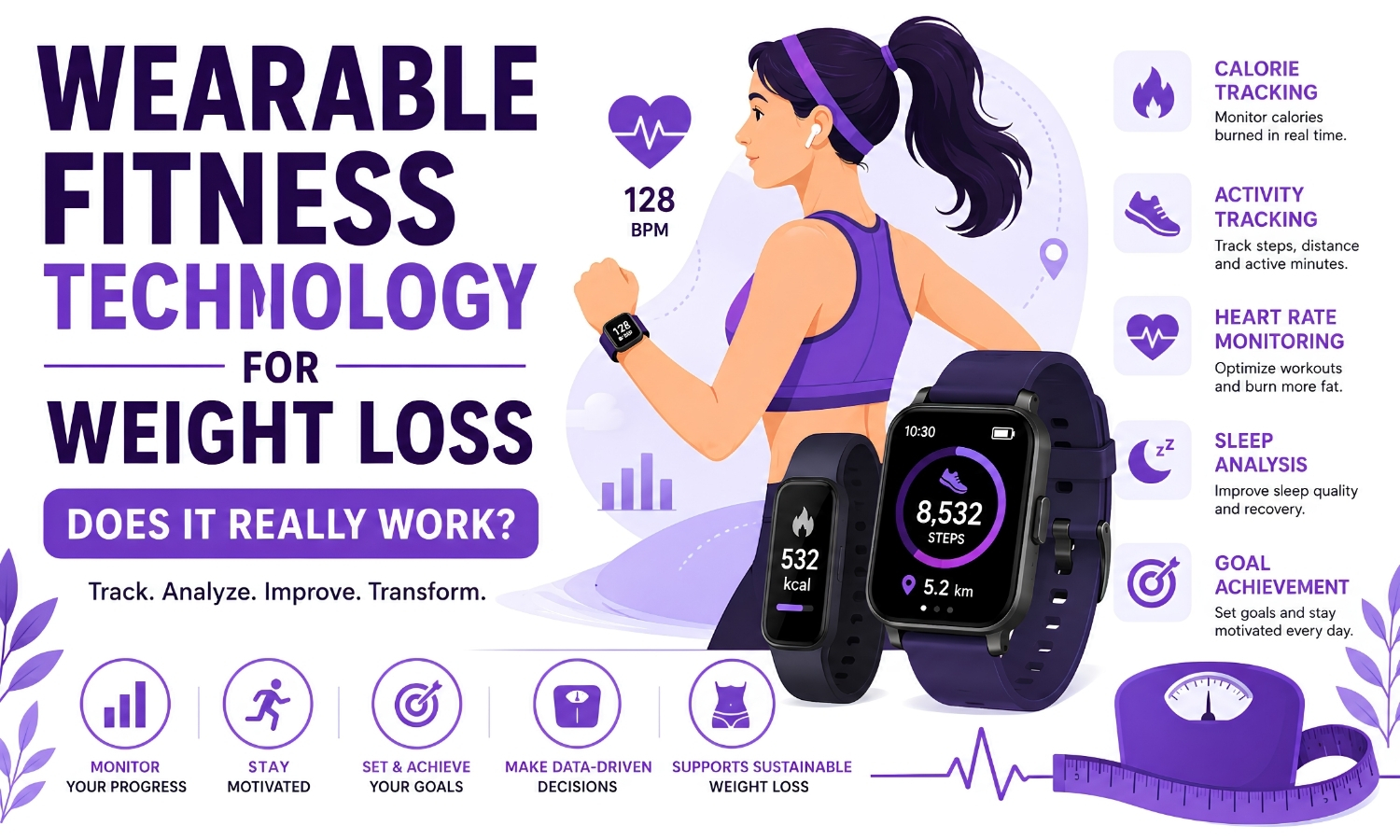
Wearable fitness technology refers to electronic devices worn on the body that track various health and fitness metrics. Common examples include:
- Smartwatches
- Fitness bands
- Smart rings
- Heart rate monitors
- GPS fitness trackers
These devices collect data throughout the day and provide insights into your activity levels and overall health.
Common Features
Most wearable fitness devices track:
- Daily step count
- Calories burned
- Heart rate
- Distance traveled
- Active minutes
- Sleep quality
- Workout performance
Advanced models may also monitor:
- Blood oxygen levels
- Stress levels
- Recovery status
- VO2 max
- Body temperature
The goal is to help users make informed decisions about their health and fitness.
How Wearable Fitness Technology Supports Weight Loss
Weight loss fundamentally comes down to creating a calorie deficit—burning more calories than you consume. Wearable devices can assist in this process in several important ways.
1. Increased Awareness
Many people underestimate how inactive they are during the day.
A fitness tracker provides real-time feedback about:
- Steps taken
- Calories burned
- Active minutes
Seeing these numbers can motivate users to move more frequently and avoid long periods of inactivity.
For example, someone aiming for 10,000 daily steps may choose to take the stairs, walk during lunch breaks, or go for an evening stroll.
2. Motivation Through Goal Setting
One of the strongest benefits of wearable technology is motivation.
Most devices allow users to set goals such as:
- Daily step targets
- Exercise duration
- Calorie burn goals
- Weekly activity targets
Achieving these goals often triggers notifications, badges, or progress celebrations, creating a sense of accomplishment that encourages consistency.
Small wins can build momentum and reinforce healthy habits.
3. Accountability
Accountability plays a major role in successful weight loss.
Wearable devices act like a personal coach on your wrist by:
- Sending reminders to move
- Tracking workout completion
- Monitoring activity trends
- Highlighting missed goals
This continuous feedback helps users stay committed to their fitness plans.
4. Better Workout Optimization
Many wearables track heart rate during exercise.
This information helps users:
- Train at the correct intensity
- Avoid undertraining
- Prevent overtraining
- Improve cardiovascular fitness
For weight loss, exercising within appropriate heart rate zones can improve calorie expenditure and workout effectiveness.
5. Improved Sleep Tracking
Poor sleep is often linked to:
- Increased hunger
- Higher calorie intake
- Reduced energy levels
- Poor recovery
Many wearable devices provide detailed sleep data, helping users identify patterns that may affect their weight-loss efforts.
Improving sleep quality can indirectly support fat loss and overall health.
What Research Says About Wearables and Weight Loss
Scientific research suggests that wearable fitness technology can be beneficial, especially when combined with other healthy lifestyle practices.
Studies have shown that self-monitoring behaviors often lead to better weight-management outcomes. Tracking activity levels increases awareness and can encourage healthier decisions throughout the day.
However, research also indicates that wearables are most effective when paired with:
- Balanced nutrition
- Regular exercise
- Behavior change strategies
- Long-term consistency
The device itself does not cause weight loss. Instead, it provides information that helps users make better choices.
Think of a fitness tracker as a navigation system. It shows the route, but you still have to drive the car.
Limitations of Wearable Fitness Technology
Despite their benefits, wearable devices have limitations.
1. Calorie Estimates Are Not Perfect
Most wearables estimate calorie burn using algorithms based on:
- Age
- Weight
- Gender
- Activity levels
While generally useful, these estimates can sometimes be inaccurate.
Users should view calorie data as guidance rather than exact measurements.
2. Data Overload
Some people become obsessed with numbers.
Constantly checking:
- Steps
- Calories
- Sleep scores
- Heart rate
Can create unnecessary stress or anxiety.
The goal should be progress, not perfection.
3. Motivation Can Fade
Many users are highly motivated during the first few weeks of owning a wearable device.
However, excitement can decrease over time.
Without clear goals and consistent habits, even the most advanced fitness tracker may end up forgotten in a drawer.
4. Technology Cannot Replace Healthy Habits
A wearable can remind you to move, but it cannot
- Choose healthy meals for you
- Prevent overeating
- Complete workouts on your behalf
Long-term weight loss still depends on lifestyle choices.
Tips to Use Wearables Effectively for Weight Loss
To maximize results, follow these practical strategies:
Set Realistic Goals
Avoid extreme targets.
Instead of aiming for 20,000 steps immediately, start with achievable goals and gradually increase activity levels.
Focus on Trends
Don’t obsess over daily fluctuations.
Monitor weekly and monthly patterns instead of reacting to every small change.
Combine Tracking with Nutrition
Exercise alone rarely creates significant weight loss.
Pair activity tracking with mindful eating and portion control for better outcomes.
Use Reminders Strategically
Movement reminders can be powerful tools for reducing sedentary behavior throughout the day.
Prioritize Consistency
Wearing the device regularly provides more useful data and helps establish lasting habits.
Best Wearable Features for Weight Loss
If your primary goal is fat loss, prioritize devices that offer:
Accurate Activity Tracking
Tracks daily movement and exercise.
Heart Rate Monitoring
Helps optimize workout intensity.
Sleep Analysis
Supports recovery and hormone balance.
Goal Tracking
Keeps motivation high.
Smartphone Integration
Allows easier monitoring of progress through dedicated apps.
The best device is not necessarily the most expensive one—it’s the one you’ll consistently use.
The Future of Wearable Fitness Technology
Wearable fitness technology continues to evolve rapidly.
Future devices are expected to offer:
- More accurate calorie tracking
- Advanced recovery monitoring
- AI-powered coaching
- Personalized fitness recommendations
- Better health predictions
As technology improves, wearables may become even more effective tools for supporting healthy lifestyles and weight management.
Conclusion
So, does wearable fitness technology for weight loss really work?
Yes, but only when used correctly.
Fitness trackers, smartwatches, and other wearable devices can increase awareness, improve accountability, encourage movement, and provide valuable health insights. These benefits can support weight-loss efforts by helping users develop healthier habits.
However, wearables are tools—not solutions.
Successful weight loss still requires a combination of balanced nutrition, regular physical activity, quality sleep, and long-term consistency.
If you use wearable fitness technology as a guide rather than relying on it as a shortcut, it can become a powerful ally on your weight-loss journey.