
Introduction
Caffeine is the world’s most popular stimulant, consumed daily by billions of people through coffee, tea, energy drinks, and supplements. It can improve alertness, focus, exercise performance, reaction time, and productivity when used correctly.
However, timing matters.
Many people consume caffeine at the wrong time, leading to energy crashes, dependence, poor sleep quality, and reduced effectiveness over time.
If you’ve ever wondered about the best time to consume caffeine, this science-based guide will help you maximize benefits while minimizing drawbacks.
How Caffeine Works
Caffeine primarily works by blocking adenosine, a neurotransmitter that builds up throughout the day and makes you feel sleepy.
When caffeine blocks adenosine:
- Alertness increases
- Fatigue decreases
- Focus improves
- Reaction time becomes faster
- Physical performance may improve
However, caffeine doesn’t eliminate fatigue—it temporarily masks it.
This is why proper timing is essential.
Why Drinking Coffee Immediately After Waking Up Isn’t Ideal
Many people reach for coffee the moment they wake up.
Surprisingly, this may not be the most effective strategy.
The Cortisol Factor
Cortisol is often called the body’s “natural wake-up hormone.”
After waking, cortisol levels naturally rise and help you feel alert.
When you consume caffeine during this peak:
- You may get less noticeable benefits
- Your body may develop tolerance faster
- Energy can crash earlier in the day
The Best Time to Consume Caffeine in the Morning
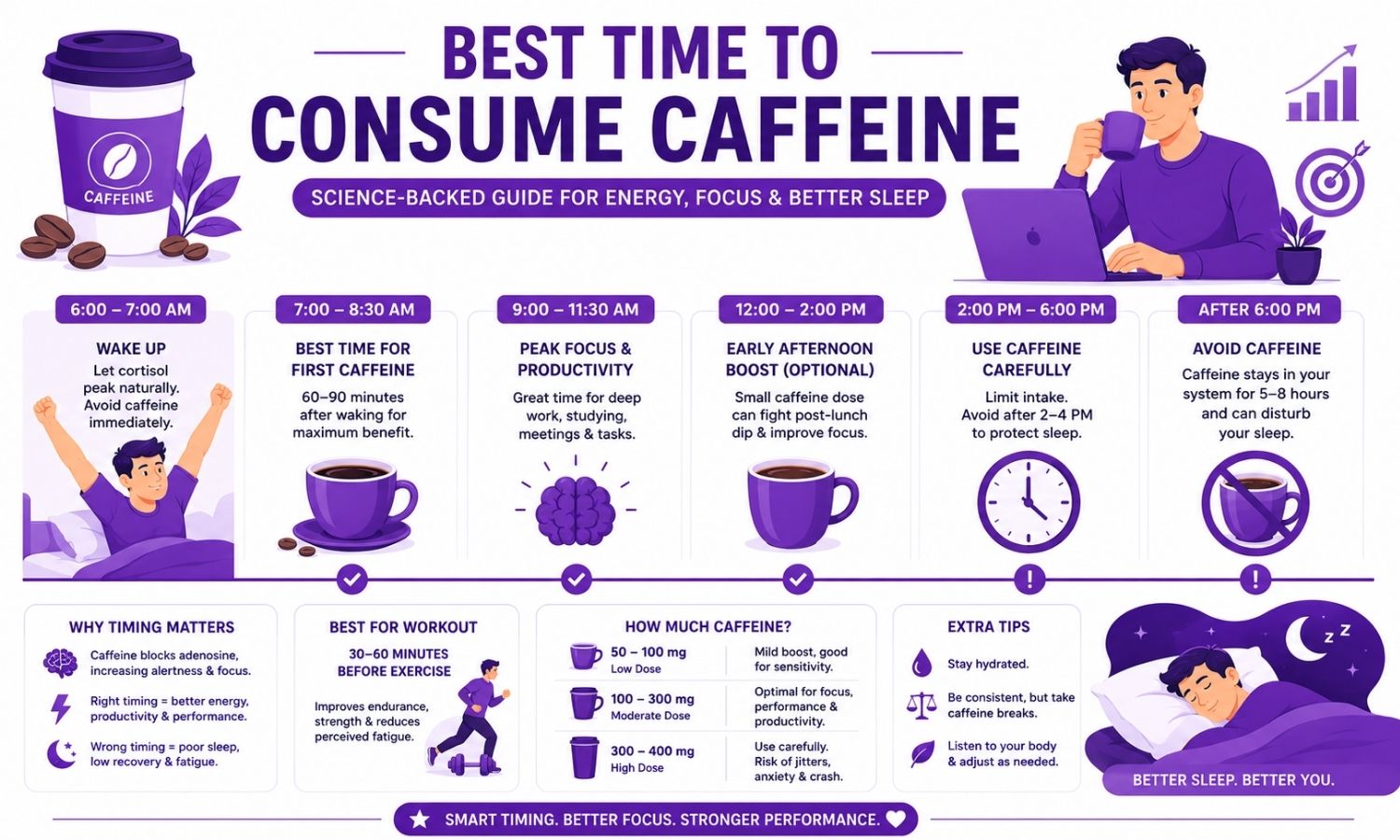
Research suggests waiting approximately 60–90 minutes after waking before consuming caffeine.
Example
If you wake up at:
- 6:00 AM → Coffee around 7:00–7:30 AM
- 7:00 AM → Coffee around 8:00–8:30 AM
- 8:00 AM → Coffee around 9:00–9:30 AM
This allows your natural cortisol peak to work first and often results in better energy levels.
Best Time for Productivity and Focus
For mental performance, caffeine is most effective when used strategically.
Ideal Window
9:00 AM – 11:30 AM
Benefits include:
- Improved concentration
- Better decision-making
- Increased productivity
- Enhanced memory performance
This is often the best time for the following:
- Deep work
- Studying
- Meetings
- Creative projects
Best Time for Exercise Performance
Caffeine is one of the most researched sports performance supplements.
Optimal Timing
Consume caffeine:
30–60 minutes before exercise
Benefits may include:
- Increased strength
- Improved endurance
- Better power output
- Reduced perception of fatigue
Example
Workout at 6:00 PM?
Take caffeine around:
- 5:00–5:30 PM
However, consider your bedtime before using caffeine later in the day.
The Half-Life of Caffeine
Understanding caffeine’s half-life is crucial.
What Is Half-Life?
Half-life refers to the time required for half the caffeine in your body to be eliminated.
For most adults:
Caffeine half-life = 5–8 hours
Example:
200 mg caffeine at 2 PM:
- Around 100 mg remains at 7 PM
- Around 50 mg remains at midnight
This explains why late-day caffeine often disrupts sleep.
The Worst Time to Consume Caffeine
Within 6–8 Hours of Bedtime
This is generally the least effective time to consume caffeine.
Potential consequences:
- Difficulty falling asleep
- Reduced sleep quality
- More nighttime awakenings
- Lower recovery
- Reduced next-day performance
Example
Bedtime: 10 PM
Avoid caffeine after:
- 2 PM to 4 PM
Many sleep experts recommend an even larger buffer.
How Much Caffeine Should You Consume?
The optimal amount varies between individuals.
General Guidelines
Low Dose
50–100 mg
Examples:
- Green tea
- Small coffee
Good for mild focus enhancement.
Moderate Dose
100–300 mg
Examples:
- Standard coffee
- Pre-workout supplement
Ideal for most people.
High Dose
300–400 mg
Can improve performance but increases risk of:
- Anxiety
- Jitters
- Sleep disruption
Signs You’re Using Too Much Caffeine
Watch for:
- Nervousness
- Anxiety
- Racing heart
- Poor sleep
- Irritability
- Energy crashes
- Dependency
More caffeine doesn’t always equal more productivity.
Caffeine Timing for Different Goals
For Fat Loss
Best timing:
- Morning
- Before workouts
May increase energy expenditure and workout intensity.
For Muscle Building
Best timing:
- 30–60 minutes pre-workout
Can improve training performance and workout volume.
For Students
Best timing:
- 60–90 minutes after waking
- Before study sessions
Avoid relying on caffeine during all-night study marathons.
For Office Workers
Best timing:
- Mid-morning
- Early afternoon if necessary
Avoid constant coffee consumption throughout the day.
Should You Drink Coffee Every Day?
Daily caffeine consumption is generally safe for healthy adults.
However, tolerance develops over time.
How to Maintain Sensitivity
Consider:
- Limiting caffeine to important tasks
- Taking occasional caffeine-free days
- Reducing intake when tolerance becomes high
This helps maintain effectiveness.
Common Caffeine Mistakes
Drinking Coffee Immediately After Waking
Wait 60–90 minutes if possible.
Consuming Caffeine Too Late
One of the biggest sleep killers.
Using Caffeine Instead of Sleep
Caffeine can temporarily mask fatigue but cannot replace proper rest.
Constantly Increasing Dosage
More caffeine often leads to diminishing returns.
Sample Caffeine Schedule
Wake-Up: 7:00 AM
8:00 AM
- First coffee (150–200 mg)
12:00 PM
- Optional tea or small coffee (50–100 mg)
After 2:00 PM
- Avoid caffeine
10:00 PM
- Bedtime
This schedule supports both productivity and quality sleep.
Final Thoughts
The best time to consume caffeine is typically 60–90 minutes after waking, when your body’s natural wakefulness hormones begin to decline. For exercise performance, consuming caffeine 30–60 minutes before training can provide noticeable benefits.
To maximize results:
- Avoid caffeine immediately after waking
- Limit intake later in the day
- Use moderate doses
- Prioritize sleep over stimulants
- Take occasional breaks if tolerance develops
When timed correctly, caffeine can be a powerful tool for productivity, fitness performance, focus, and overall daily energy.