
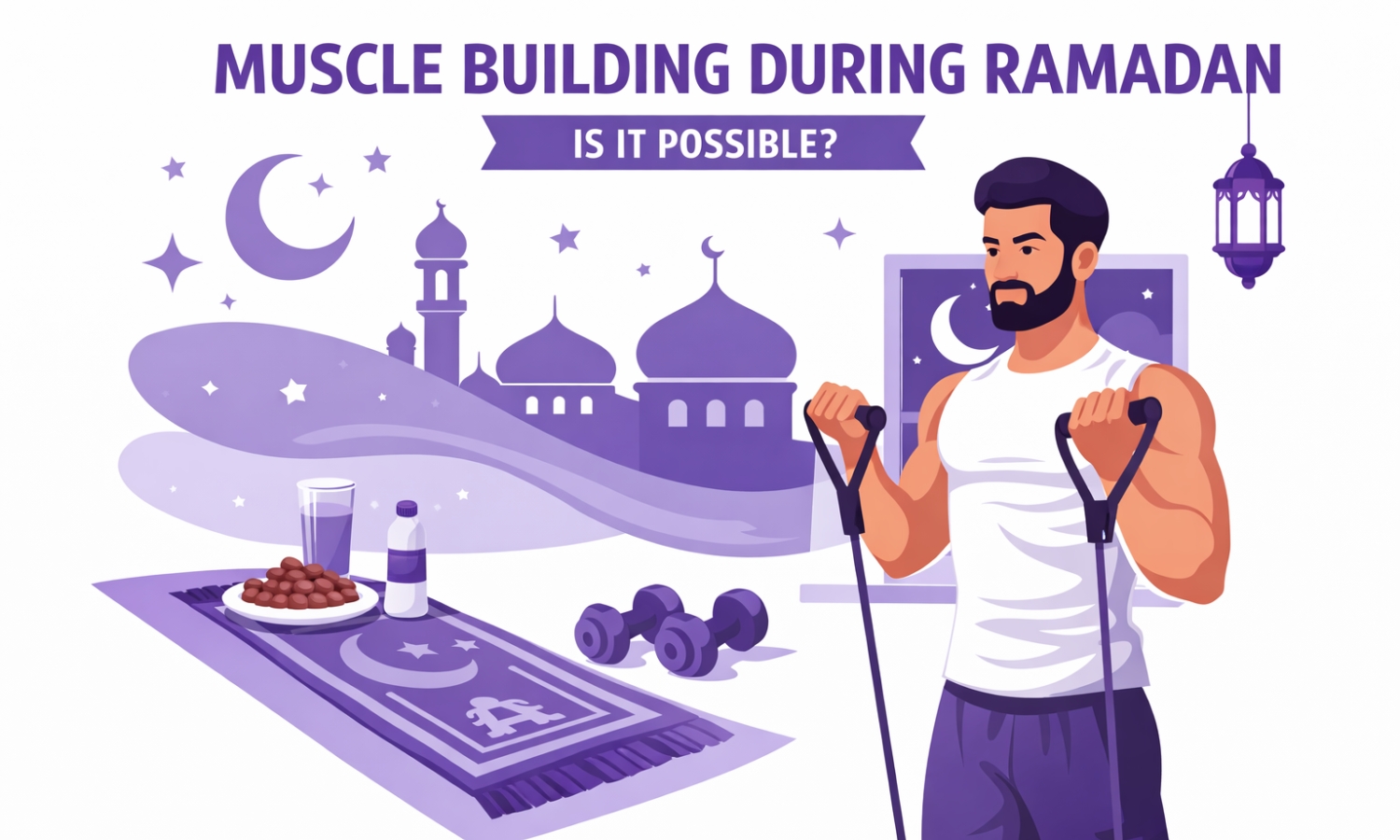
Build Muscle During Ramadan: Is It Really Possible?
Many people believe you can’t build muscle during Ramadan because you’re fasting for long hours. The truth? It is possible — but your strategy must change.
Ramadan isn’t the best time for extreme bulking. However, with proper training timing, smart nutrition, and recovery planning, you can maintain strength and even gain lean muscle.
Let’s break down how.
Understanding Muscle Growth While Fasting
Muscle growth depends on three key factors:
- Progressive resistance training
- Adequate protein intake
- Calorie surplus (or at least maintenance)
- Recovery & sleep
During Ramadan:
- Eating window is limited
- Hydration is restricted
- Energy levels fluctuate
That means your approach needs to be more strategic — not more intense.
Best Time to Build Muscle During Ramadan
Timing is everything.
✅ Option 1: 1–2 Hours After Iftar (Best for Muscle Gain)
This is the ideal time if your goal is to build muscle during Ramadan.
Why?
- You’re hydrated
- You’ve consumed carbs for energy
- You can lift heavier
- Recovery is easier
💡 Tip: Have a light Iftar (dates + water + small protein source), train, then eat your main meal.
Option 2: 45 Minutes Before Iftar
This works if:
- You prefer training fasted
- Your session is moderate intensity
Immediately break your fast with protein and carbs after training.
Avoid high-volume, high-intensity workouts while dehydrated.
Ramadan Muscle-Building Workout Plan
Focus on compound exercises and moderate volume.
4-Day Split Example
Day 1: Upper Body Push
- Push-ups / Bench Press – 4 sets
- Shoulder Press – 3 sets
- Triceps Dips – 3 sets
Day 2: Lower Body
- Squats – 4 sets
- Lunges – 3 sets
- Glute Bridges – 3 sets
Day 3: Rest or Light Activity
Day 4: Upper Body Pull
- Pull-ups / Rows – 4 sets
- Bicep Curls – 3 sets
- Face Pulls – 3 sets
Day 5: Full Body
- Deadlifts (light-moderate)
- Push-ups
- Plank
Keep reps in the 8–12 range for hypertrophy.
Rest 60–90 seconds between sets.
Nutrition Strategy to Build Muscle During Ramadan
Nutrition determines your results.
Protein Intake
Aim for:
1.6–2.2g protein per kg body weight
Good sources:
- Eggs
- Chicken
- Fish
- Greek yogurt
- Paneer
- Lentils
Split protein between Iftar and Suhoor.
Calories Matter
To build muscle during Ramadan:
- Eat at maintenance or slight surplus
- Don’t skip Suhoor
- Include complex carbs (rice, oats, potatoes)
Avoid relying only on fried Iftar foods — they add calories but not quality nutrition.
Hydration is Critical
- 8–10 glasses water between Iftar & Suhoor
- Add electrolytes if sweating heavily
- Limit caffeine
Muscle performance drops fast when dehydrated.
Recovery: The Overlooked Muscle Builder
Ramadan often disrupts sleep schedules.
To maximize muscle growth:
- Get at least 6–8 hours total sleep
- Take short daytime naps if needed
- Avoid late-night heavy meals
Recovery equals growth.
Common Mistakes When Trying to Build Muscle During Ramadan
- Training too intensely while fasted
- Not eating enough protein
- Skipping Suhoor
- Doing excessive cardio
- Ignoring hydration
Remember: Ramadan is about maintenance + small progress, not aggressive bulking.
Can Beginners Build Muscle During Ramadan?
Yes — beginners often can.
Why?
New lifters experience “newbie gains.” Even with fasting, the body responds quickly to resistance training.
If you’re new:
- Focus on consistency
- Train 3–4 days weekly
- Prioritize form
Should You Bulk During Ramadan?
Aggressive bulking? Not ideal.
Lean muscle maintenance or slight gains? Absolutely possible.
If your main goal is serious size increase, plan a structured bulk after Ramadan.
Spiritual and Physical Balance
Ramadan is about discipline. That same discipline can strengthen your fitness journey.
Instead of stopping training completely:
- Reduce volume
- Maintain intensity
- Eat smarter
- Sleep better
You don’t have to lose progress this month.
Final Verdict: Can You Build Muscle During Ramadan?
Yes — you can build muscle during Ramadan.
But:
- Train smart
- Eat enough protein
- Stay hydrated
- Prioritize recovery
Think maintenance first, growth second.
Consistency over 30 days makes a difference.
Stay strong. Stay disciplined. Stay progressing.