
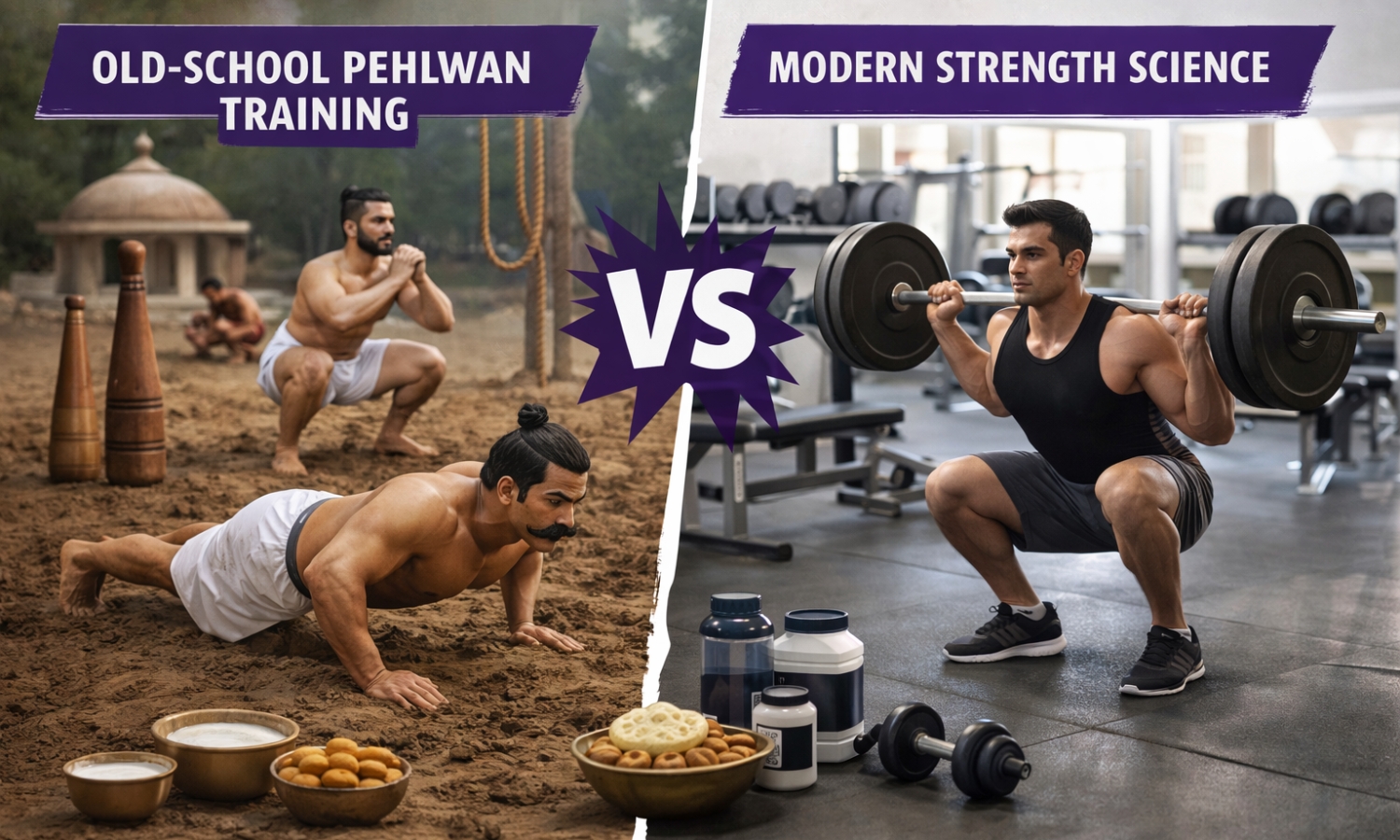
For centuries, Old-School Pahelwan Training built warriors in India’s akhadas—strong, explosive, and incredibly durable. Today, modern strength science dominates gyms with barbells, protein shakes, and scientifically designed programs.
But which approach actually builds better muscle, strength, and endurance?
In this detailed comparison, we break down traditional Pahelwan workouts vs. modern strength training methods—so you can decide what works best for your goals.
What Is Old-School Pahelwan Training?
Old-School Pahelwan Training originates from Indian wrestling traditions practiced in local akhadas. It focuses on functional strength, bodyweight endurance, and raw physical toughness.
Core Elements of Pahelwan Training
- Dands
- Baithaks
- Gada (Macebell) swings
- Mud pit wrestling practice
- Rope climbing
- High-calorie desi diet (milk, ghee, almonds)
Unlike modern bodybuilding, Pahelwans trained for performance—not aesthetics.
Key Characteristics
- High repetitions (500–2000 daily reps)
- Natural resistance (bodyweight, mud, ropes)
- Daily intense sessions
- Emphasis on discipline and recovery rituals
This style builds exceptional stamina, grip strength, mobility, and mental toughness.
What Is Modern Strength Science?
Modern strength science is built on exercise physiology, biomechanics, and progressive overload principles.
Core Elements of Modern Strength Training
- Barbell squats
- Deadlifts
- Bench press
- Periodized programming
- Measured protein intake
- Structured rest and recovery
Training is optimized using:
- Progressive overload
- Muscle hypertrophy research
- Recovery science
- Data tracking
The goal? Maximum results in minimum time.
Training Philosophy: Tradition vs Science
1. Purpose of Training
Pahelwan Training:
Build a fighter’s body explosive, enduring, and battle-ready.
Modern Strength Science:
Build measurable strength and muscle size efficiently.
Pahelwans trained for survival and dominance in the mud pit. Modern lifters train for numbers on the bar or aesthetic goals.
2. Volume and Intensity
Old-school Pahelwans performed:
- 1000+ baithaks
- 500+ dands
- Hours of grappling
Modern programs usually involve:
- 3–5 sets per exercise
- 6–12 reps for hypertrophy
- 3–5 training days per week
Pahelwan style = extreme volume.
Modern science = calculated intensity.
Equipment Used
| Pahelwan Training | Modern Strength Training |
|---|---|
| Mud pit | Squat rack |
| Gada (mace) | Barbells |
| Bodyweight | Machines |
| Rope climbing | Cable systems |
Pahelwans used minimal tools but maximized effort.
Muscle Building: Which Works Better?
Hypertrophy (Muscle Size)
Modern strength science wins here.
Why?
- Controlled reps
- Mechanical tension focus
- Progressive overload tracking
- Scientific protein intake
Pahelwan training builds dense, functional muscle but not always maximum size.
Functional Strength
Pahelwan training shines in:
- Grip power
- Core stability
- Joint mobility
- Real-world endurance
High-rep baithaks and dands develop resilient connective tissue and work capacity.
Endurance & Conditioning
Old-School Pahelwan Training is superior for muscular endurance.
Performing 1500 squats daily builds:
- Cardiovascular conditioning
- Mental resilience
- Leg stamina beyond typical gym levels
Modern programs often separate strength and cardio.
Injury Risk & Recovery
Pahelwan Approach
- Natural movements
- Deep mobility
- Oil massages
- Heavy dairy-based nutrition
But excessive volume without periodization can cause overuse injuries.
Modern Science Approach
- Deload weeks
- Mobility protocols
- Load management
- Recovery tracking
Science-based training reduces burnout risk when properly programmed.

Diet Comparison
Pahelwan Diet
Traditional wrestlers consumed:
- 2–5 liters of milk daily
- Ghee
- Almonds
- Whole wheat rotis
- Lentils
High calories. High fat. Extremely natural.
Modern Strength Diet
- Calculated macros
- Whey protein
- Creatine
- Lean meats
- Controlled fats
Modern nutrition is more precise, but traditional diets were surprisingly effective.
Mental Toughness: The Hidden Factor
Pahelwan training builds unmatched discipline.
Waking up before sunrise.
Training barefoot in mud.
Repeating thousands of reps.
This creates warrior-level mental strength that modern gym culture sometimes lacks.
Can You Combine Both?
Absolutely, and this is where magic happens.
Hybrid Approach (Best of Both Worlds)
You can:
- Use barbell squats for strength progression
- Add 200 baithaks for endurance
- Train deadlifts for posterior power
- Include rope climbing for grip
- Use progressive overload with bodyweight movements
This approach gives:
- Muscle size
- Functional power
- Endurance
- Longevity
Sample Hybrid Weekly Plan
Day 1: Lower Body
- Barbell squats 5×5
- 200 baithaks
- Walking lunges
- Core work
Day 2: Upper Body
- Bench press
- Pull-ups
- 150 dands
- Rope climbing
Day 3: Conditioning
- Gada swings
- Farmer carries
- Sprints
- Mobility work
Repeat 4–5 days weekly.
Final Verdict
Old-School Pahelwan Training builds durability, endurance, and raw functional power.
Modern strength science builds measurable muscle and maximal strength efficiently.
The smartest move?
Combine both.
Train like a warrior but program like a scientist.
That’s how you build a physique that looks powerful and performs even better.
If you want more desi-meets-modern fitness guides, stay connected with Pahelwan.com and start training with purpose today.