
Introduction
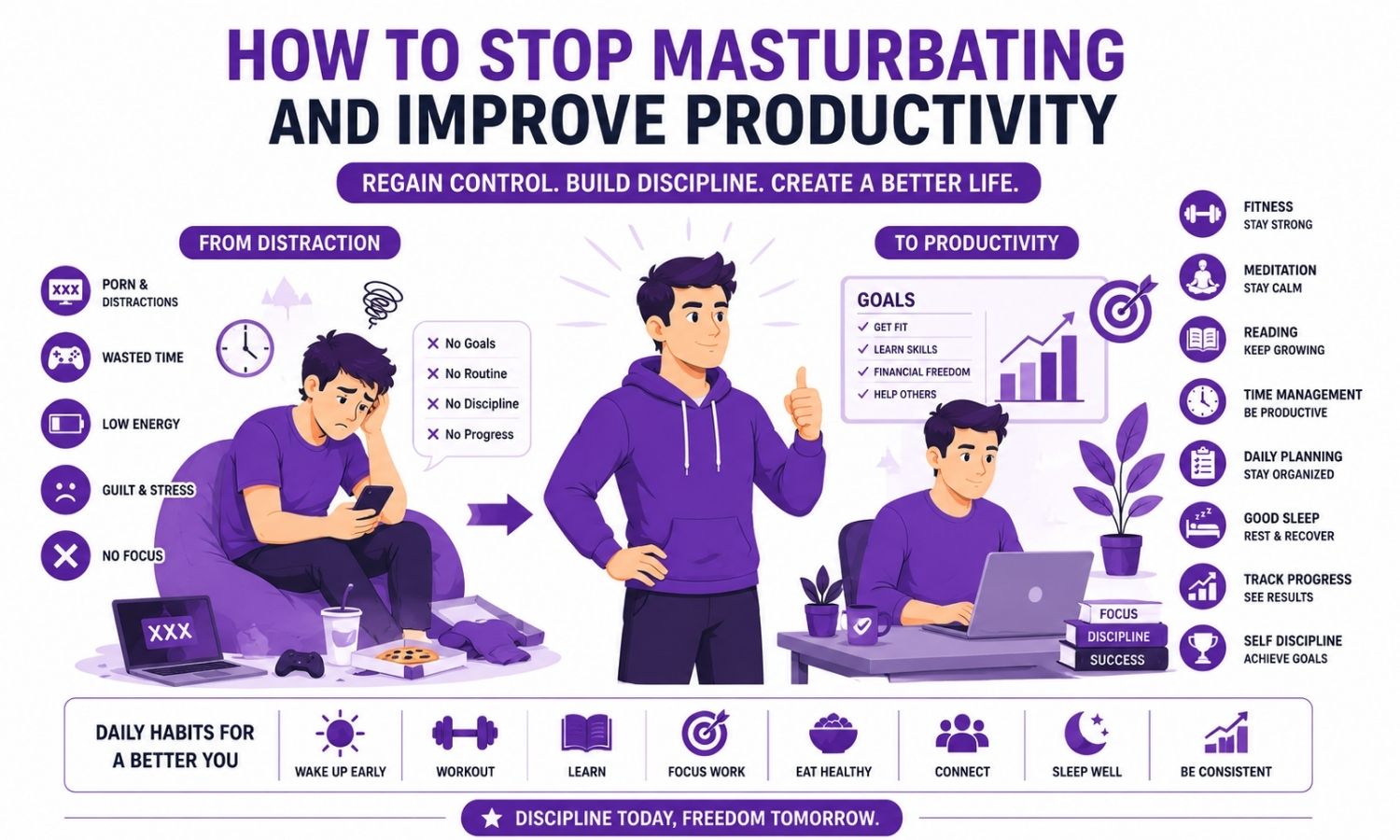
If you’re searching for how to stop masturbating and improve productivity, chances are you’ve noticed a connection between excessive masturbation and a lack of focus, motivation, or energy in your daily life.
It’s important to understand that masturbation itself is a normal behavior for many people. However, when it becomes excessive or compulsive, it can consume time, distract from important goals, and become a way to avoid stress, boredom, or difficult emotions.
The objective isn’t necessarily to eliminate sexual urges. Instead, the goal is to regain control, build healthier habits, and channel your time and energy into activities that improve your life.
This guide will show you practical, science-based strategies to reduce excessive masturbation and significantly boost your productivity.
Understanding the Productivity Problem
Many people don’t struggle because of masturbation itself. They struggle because of the habits surrounding it.
Common issues include:
- Spending hours consuming adult content
- Procrastinating important tasks
- Losing sleep due to late-night habits
- Using masturbation as an escape from stress
- Feeling mentally drained afterward
- Experiencing guilt that reduces motivation
The real goal is replacing an unproductive habit loop with productive behaviors.
Why Excessive Masturbation Can Hurt Productivity
1. It Becomes a Quick Dopamine Fix
Your brain naturally seeks rewards.
When you’re bored, stressed, or overwhelmed, masturbation may become an easy source of instant pleasure.
Over time, your brain can start preferring quick rewards instead of the following:
- Studying
- Working
- Exercising
- Learning new skills
This makes productive activities feel less appealing.
2. It Encourages Procrastination
Many people masturbate when they want to avoid the following:
- Difficult tasks
- Deadlines
- Stressful situations
- Mental effort
Instead of solving problems, the behavior temporarily distracts from them.
The task remains unfinished, creating even more stress later.
3. It Can Affect Sleep
Late-night scrolling and adult content consumption often reduce sleep quality.
Poor sleep leads to:
- Reduced focus
- Lower energy
- Weaker self-control
- Decreased productivity
Better sleep often results in immediate productivity improvements.
Step 1: Identify Your Triggers
You can’t change a habit you don’t understand.
For one week, track:
- Time of day
- Emotional state
- Location
- What happened before the urge
You may notice triggers such as
- Boredom
- Stress
- Loneliness
- Social media use
- Staying up late
Awareness is the first step toward control.
Step 2: Fill Your Day With Purpose
One of the biggest causes of excessive masturbation is too much unstructured time.
Create a Daily Schedule
Plan:
- Work sessions
- Exercise
- Meals
- Learning time
- Social activities
- Sleep
A busy, purposeful schedule leaves less room for unhealthy habits.
Step 3: Start Exercising Consistently
Exercise is one of the most effective ways to improve both self-control and productivity.
Benefits
Exercise helps:
- Reduce stress
- Improve mood
- Increase confidence
- Boost energy
- Enhance focus
Beginner Routine
Monday
Full-body workout
Tuesday
30-minute walk
Wednesday
Strength training
Thursday
Light cardio
Friday
Strength training
Weekend
Active recovery
Physical activity creates positive momentum in every area of life.
Step 4: Reduce Porn Consumption
For many people, pornography is a bigger problem than masturbation itself.
Why?
Porn provides constant novelty and stimulation, making self-control more difficult.
What to Do
- Install website blockers
- Unfollow triggering accounts
- Limit screen time
- Keep devices away from the bed
Reducing exposure often leads to fewer urges.
Step 5: Use the 10-Minute Rule
Urges usually peak and then fade.
When an urge appears:
- Set a timer for 10 minutes.
- Leave the room.
- Do another activity.
Examples:
- Push-ups
- Walking
- Reading
- Drinking water
- Journaling
Most urges become manageable after a short delay.
Step 6: Set Meaningful Goals
A powerful purpose can reduce destructive habits.
Ask yourself:
- What am I working toward?
- What kind of person do I want to become?
- What goals excite me?
Examples:
- Building muscle
- Starting a business
- Learning a skill
- Improving grades
- Growing a career
Clear goals make distractions less attractive.
Step 7: Improve Your Environment
Your environment shapes your behavior.
Productivity-Friendly Changes
- Keep your room clean
- Remove triggers
- Create a dedicated workspace
- Keep workout equipment visible
- Limit time spent alone when possible
Small environmental improvements produce big results over time.
Step 8: Build Better Morning Habits
The first hour of your day often determines your productivity level.
Productive Morning Routine
- Wake up at a consistent time
- Drink water
- Exercise or stretch
- Review goals
- Avoid social media
Starting strong helps maintain momentum throughout the day.
Step 9: Track Your Progress
What gets measured gets improved.
Track:
- Productive hours
- Exercise sessions
- Reading time
- Days without unhealthy habits
- Sleep quality
Progress tracking creates accountability and motivation.
Step 10: Replace the Habit, Don’t Just Remove It
Many people fail because they only focus on stopping.
Successful people replace unhealthy habits with positive alternatives.
Better Activities
- Reading
- Skill development
- Fitness
- Meditation
- Writing
- Business projects
- Learning online
Your brain still needs rewards, just healthier ones.
A Simple Productivity Recovery Plan
Morning
- Wake up early
- Exercise
- Healthy breakfast
- Plan your day
Afternoon
- Focus on deep work
- Avoid unnecessary browsing
- Take short breaks
Evening
- Spend time with family or friends
- Read a book
- Prepare for tomorrow
Night
- Avoid triggers
- Keep devices away from bed
- Sleep 7–9 hours
Consistency matters more than perfection.
Final Thoughts
Learning how to stop masturbating and improve productivity isn’t about suppressing natural urges. It’s about creating a lifestyle where your goals become more rewarding than your distractions.
Focus on:
- Exercise
- Better sleep
- Clear goals
- Structured routines
- Reduced digital distractions
- Consistent self-improvement
Every productive choice strengthens your self-discipline. Over time, small daily improvements compound into significant personal growth.
Remember: productivity isn’t built in one day. It’s built through repeated actions, smart habits, and a commitment to becoming a better version of yourself.