
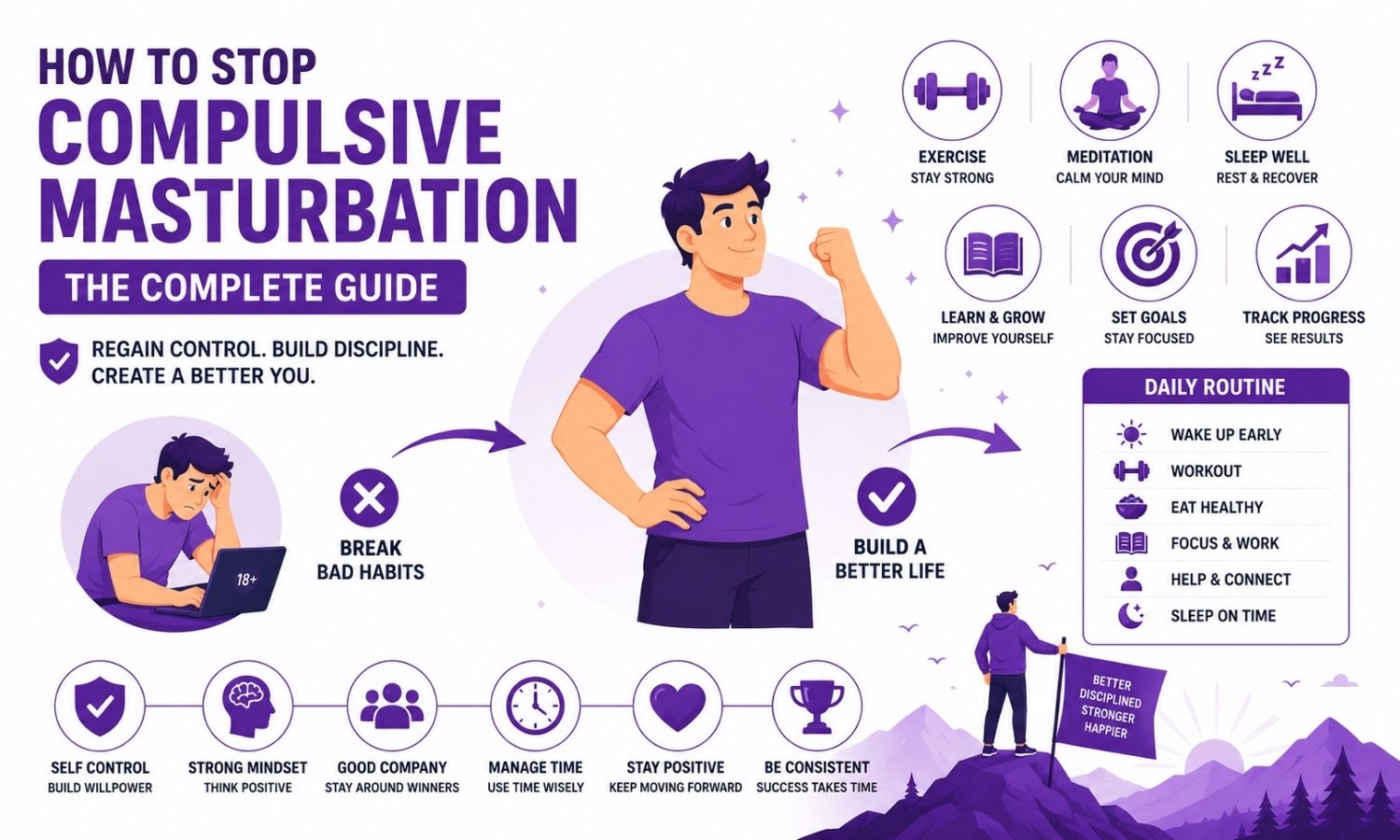
Introduction
If you’re searching for how to stop compulsive masturbation, you’re not alone. Many people struggle with urges that feel difficult to control, especially when masturbation becomes a coping mechanism for stress, boredom, loneliness, anxiety, or habit.
It’s important to understand that masturbation itself is a normal sexual behavior. The concern arises when it becomes compulsive and interferes with daily life, relationships, work, studies, sleep, fitness goals, or emotional well-being.
The good news is that compulsive behaviors can be managed and overcome. This guide will help you understand why compulsive masturbation happens and provide practical strategies to regain control.
What Is Compulsive Masturbation?
Compulsive masturbation occurs when a person repeatedly masturbates despite wanting to reduce or stop the behavior.
Common signs include:
- Feeling unable to control urges
- Spending excessive time masturbating
- Using masturbation to escape emotions
- Neglecting responsibilities
- Experiencing guilt or shame afterward
- Repeatedly trying to quit without success
The issue is usually not the act itself but the loss of control over it.
Why Does It Become Compulsive?
Understanding the root cause is the first step toward change.
1. Dopamine and Reward Loops
Sexual stimulation activates the brain’s reward system and releases dopamine, a neurotransmitter associated with pleasure and motivation.
Over time, the brain may begin to seek this reward whenever you feel:
- Bored
- Stressed
- Lonely
- Anxious
- Frustrated
This creates a habit loop.
2. Emotional Coping
Many people use masturbation to temporarily escape difficult emotions.
Common triggers include:
- Stress
- Depression
- Social isolation
- Relationship problems
- Academic or work pressure
3. Easy Access to Pornography
Unlimited online content can increase the frequency and intensity of urges, making self-control more challenging.
Step 1: Identify Your Triggers
Before you can change a habit, you need to understand what causes it.
For one week, keep a simple journal.
Record:
- Time of urge
- Location
- Emotional state
- What happened before the urge
You may discover patterns such as the following:
- Late-night boredom
- Stress after work
- Being alone in your room
- Excessive social media use
Awareness creates control.
Step 2: Remove Environmental Triggers
Willpower alone is rarely enough.
Design your environment to support success.
Practical Changes
- Install website blockers.
- Remove saved adult content.
- Keep devices out of the bedroom.
- Avoid long periods of isolation.
- Stay in common areas when possible.
Reducing exposure can dramatically reduce temptation.
Step 3: Replace the Habit
Trying to “just stop” often fails because habits leave a vacuum.
Replace the behavior with healthier alternatives.
Better Options
When an urge appears:
- Go for a walk.
- Do 20 push-ups.
- Drink water.
- Call a friend.
- Read a book.
- Practice deep breathing.
- Work on a hobby.
The goal is not suppression but redirection.
Step 4: Exercise Regularly
Physical activity is one of the most effective tools for reducing compulsive behaviors.
Benefits
Exercise:
- Reduces stress
- Improves mood
- Burns excess energy
- Enhances self-discipline
- Improves sleep quality
Recommended Routine
- Strength training: 3–5 times weekly
- Walking: 8,000–10,000 steps daily
- Cardio: 2–3 sessions weekly
A busy body often leads to a calmer mind.
Step 5: Build a Structured Daily Routine
Compulsive behaviors often thrive in unstructured time.
Create a Daily Schedule
Include:
- Fixed wake-up time
- Exercise
- Work or study blocks
- Social interaction
- Meal times
- Sleep schedule
The less idle time you have, the fewer opportunities for compulsive habits.
Step 6: Improve Sleep
Sleep deprivation weakens impulse control and increases cravings.
Better Sleep Habits
- Sleep 7–9 hours nightly
- Avoid screens before bed
- Keep a consistent schedule
- Limit caffeine late in the day
Many people notice a significant reduction in urges when sleep improves.
Step 7: Manage Stress Effectively
Stress is one of the biggest triggers for compulsive masturbation.
Healthy Stress Relievers
Try:
- Meditation
- Journaling
- Prayer or spiritual practices
- Yoga
- Deep breathing exercises
- Talking to trusted friends
Learning healthy coping skills reduces the need for unhealthy escapes.
Step 8: Limit Porn Consumption
For many people, pornography intensifies compulsive sexual behavior.
Helpful Strategies
- Use content blockers.
- Unfollow triggering social media accounts.
- Reduce unnecessary screen time.
- Replace online browsing with productive activities.
Even reducing exposure can make a noticeable difference.
Step 9: Track Progress Without Perfectionism
Many people quit after one setback.
Recovery rarely happens in a straight line.
Instead of Counting Failures
Track:
- Number of successful days
- Improved habits
- Reduced frequency
- Better emotional control
Progress matters more than perfection.
Step 10: Seek Support When Needed
Sometimes compulsive masturbation is linked to deeper emotional or psychological issues.
Consider professional support if:
- The behavior feels uncontrollable
- It affects relationships
- It interferes with work or studies
- It causes significant distress
A qualified mental health professional can provide effective strategies and support.
Common Mistakes to Avoid
Using Shame as Motivation
Shame usually increases stress and often worsens compulsive behaviors.
Expecting Instant Results
Habits formed over months or years take time to change.
Relying Only on Willpower
Environmental changes and healthy routines are often more effective.
Isolating Yourself
Strong social connections reduce compulsive behavior and improve mental health.
A Simple 30-Day Action Plan
Week 1
- Identify triggers
- Start journaling
- Install blockers
Week 2
- Begin a workout routine
- Improve sleep habits
- Reduce screen time
Week 3
- Develop replacement activities
- Practice stress management
Week 4
- Review progress
- Adjust strategies
- Continue building consistency
Small daily improvements create lasting change.
Final Thoughts
Learning how to stop compulsive masturbation is less about fighting urges and more about building a healthier lifestyle.
Focus on:
- Understanding your triggers
- Creating a structured routine
- Exercising regularly
- Improving sleep
- Managing stress
- Replacing unhealthy habits with positive ones
Most importantly, be patient with yourself. Change takes time, and occasional setbacks do not erase progress. Every day you practice self-control, you strengthen the habits and mindset needed for long-term success.
The goal isn’t perfection it’s regaining control and creating a life aligned with your values and goals.